
What Does a Corporate Toastmaster Actually Do at a London Event?
- Yell QA Test Account
- Apr 28
- 7 min read
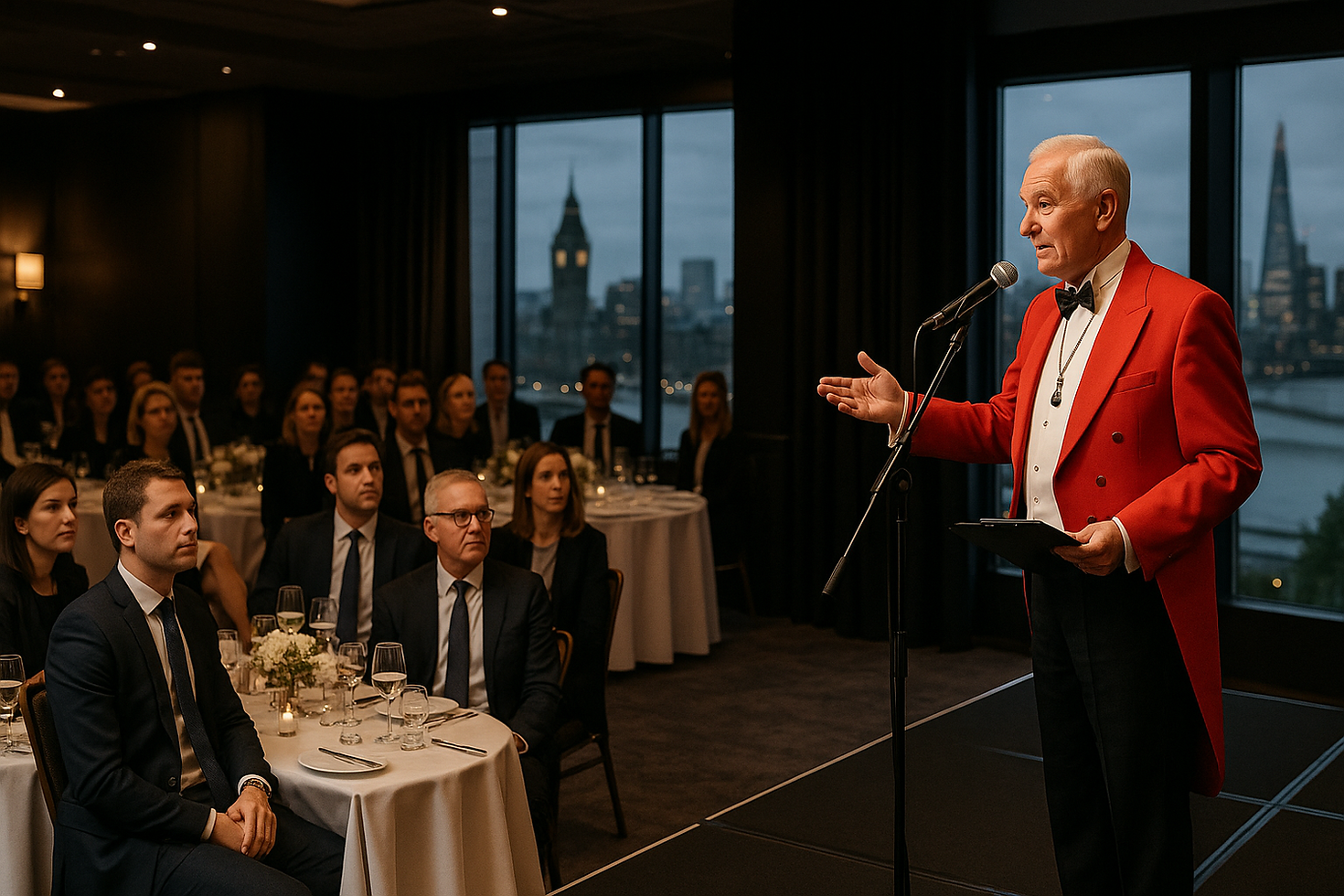
If you are asking what does a corporate toastmaster do, the short answer is this: they keep a formal event moving smoothly, clearly and professionally. At a London corporate event, that often means managing introductions, guiding guests, coordinating timings and making sure each part of the programme happens in the right order.
That role is more practical than many organisers first realise. A running order may look simple on paper, but once guests arrive, speakers need cueing and the venue is juggling service timings, someone needs to hold the event together in real time. At Jac-Mac Events, we provide toastmaster and corporate event support in London, alongside after dinner speakers and conference equipment.
What does a corporate toastmaster do at a London event?
A corporate toastmaster acts as the professional front-of-house guide for the event. They are there to give structure to the occasion, help people know what is happening next and support the organiser so the programme runs with confidence.
They help shape and follow the running order.
They make formal announcements at the right moments.
They introduce hosts, speakers, presenters or guests.
They keep transitions smooth between reception, dining, speeches and entertainment.
They support guest management, including seating and movement in the room.
They work alongside the venue team, organisers and AV support to keep everything aligned.
In other words, a corporate toastmaster is not just a ceremonial presence. They are there to protect the flow of the event and help it feel polished from start to finish.
What a corporate toastmaster does before the event starts
Reviews the running order
Before guests enter the room, a toastmaster should understand the shape of the event. That includes the order of service, key timings, who is speaking, when meals are being served and where formal moments need clear direction.
This matters because many on-the-day issues start with small gaps in the schedule. If nobody is clear about when awards begin, when a speaker should be introduced or when guests should move from drinks to dinner, delays build quickly.
Coordinates with the people behind the scenes
A corporate toastmaster does not work in isolation. They should know who is handling the venue, who is controlling microphones, who is leading the event internally and who needs to be ready backstage or near the lectern.
For events that include presentations or amplified speaking, this coordination becomes even more important. Where required, we can also support the wider event plan with conference equipment for corporate events, helping organisers keep the programme and technical side connected.
Prepares the formal details
One of the most useful parts of the role is preparation. A good toastmaster should be briefed on names, job titles, the order of introductions and any important guest arrivals. This helps avoid awkward pauses, incorrect announcements or unclear handovers during live moments.
For organisers, that preparation removes pressure. Instead of trying to remember every cue personally, you have one central point of control for the front-facing parts of the event.
What a corporate toastmaster does during the event
Welcomes guests and sets the tone
First impressions count. When guests arrive at a formal dinner, awards night or corporate reception, a toastmaster can help create an immediate sense of order and professionalism. They can direct guests clearly, help with room entry and make sure the opening of the event feels deliberate rather than improvised.
This is particularly valuable where the room includes senior stakeholders, invited guests or a structured programme that needs the right level of formality.
Makes announcements people actually need
A corporate toastmaster should make the event easier to follow. That can include announcing when guests should be seated, when dinner is served, when speeches are beginning or when the room should turn attention back to the stage.
The key point is clarity. Guests should never feel unsure about what is happening next.
Introduces speakers, presenters and key moments
One of the most visible parts of the role is handling introductions. A toastmaster can announce hosts, leadership speakers, award presenters and other formal contributors in a way that keeps the event moving and gives each person a proper lead-in.
That matters because weak introductions can affect the energy of the room. A confident, well-timed introduction helps each speaker step in cleanly and keeps attention focused where it should be.
Keeps timings under control
Timings rarely stay perfect all evening. Service runs a few minutes late, a speaker goes over, guests take longer to be seated or the room needs extra turnaround time. A corporate toastmaster helps manage those shifts without creating visible disruption.
They cannot stop every delay, but they can help absorb it. By adjusting cues, making timely announcements and coordinating the next transition, they keep the programme realistic and the room calm.
Manages transitions between event stages
Corporate events often succeed or fail in the transitions. Moving guests from a drinks reception into dinner, from dinner into speeches, from speeches into awards or from a formal section into networking all requires clear direction.
This is where the role earns its value. Instead of the organiser trying to chase guests, cue speakers and answer venue questions all at once, the toastmaster leads the visible movement of the event.
Supports the organiser without taking over the brand
Many businesses want their event to feel polished, but not stiff. That is a fair concern. A strong corporate toastmaster should add structure without dominating the room or making the occasion feel outdated.
The role is to support the organiser's goals, tone and audience. In a modern corporate setting, that usually means being composed, clear and helpful rather than overly theatrical.
Typical moments a toastmaster can support
While every event is different, a corporate toastmaster is commonly useful for:
Guest arrival and room guidance
Calls to be seated
Opening remarks and formal welcomes
Introductions for hosts, senior leaders or guest speakers
Awards presentations
Announcements before entertainment or keynote segments
Transitioning from formal sections into networking or close
If your programme also includes a speaker after dinner, we can support that part of the evening too through our after dinner speaker support, helping the whole schedule feel joined up rather than fragmented.
What a corporate toastmaster does not replace
It is also important to be clear about what the role is not.
Not your event planner: a toastmaster helps deliver the live running order, but they are not a substitute for wider event planning.
Not your AV technician: they work with the technical team, but they do not replace microphone, sound or presentation support.
Not your venue manager: the venue still controls venue operations and service.
Not always the same as an informal MC: an MC may focus more on personality and presentation style, while a toastmaster is often there to give structure, formality and event control.
The best results usually come when these roles work together. The organiser keeps oversight, the venue handles service, the AV team manages the technical side and the toastmaster keeps the front-of-house flow clear.
Why this matters at London corporate events
London corporate events often bring together busy schedules, formal venues, senior guests and high expectations. Even a well-planned evening can feel disjointed if no one is clearly guiding the sequence in the room.
A corporate toastmaster helps reduce that risk by giving the event a steady point of coordination. For organisers, the practical benefits are clear:
Guests receive consistent direction.
Speakers are introduced properly and cued at the right time.
The event is less likely to feel rushed or uncertain.
Internal teams are not forced to manage the microphone while also hosting guests.
The overall experience feels more professional.
That is often the difference between an event that simply happens and one that feels properly managed.
When it makes sense to book a corporate toastmaster
Not every business event needs one. A short internal meeting or informal gathering may not require formal front-of-house support.
However, the role becomes especially valuable when your event includes a defined running order, guest announcements, speaker introductions or multiple transitions. Common examples include:
Corporate gala dinners
Awards evenings
Formal business receptions
Conferences with structured stage moments
Events with VIP guests or leadership speakers
If several moving parts need to happen in sequence, a toastmaster can make the event much easier to manage.
How to choose the right toastmaster support
If you are comparing options, look beyond appearance and ask practical questions.
How do they work from a running order? You want someone who understands timings, cues and live event flow.
How do they coordinate with organisers, venues and AV teams? Good communication is essential.
Can they handle formal introductions clearly and confidently? This is one of the most visible parts of the role.
Will their style suit your audience? The tone should fit the event, not overpower it.
Can they support a wider corporate event brief? This is useful if you also need speakers or conference equipment.
At Jac-Mac Events, our business values include friendly service, highest standards and expert advice. That is exactly what corporate organisers need when they want practical support rather than last-minute guesswork.
Ask Jac-Mac Events about toastmaster support for your next London corporate event
If you want your event to feel organised, professional and easy for guests to follow, a corporate toastmaster can make a real difference. We support businesses in London with toastmasters, corporate events, after dinner speakers and conference equipment.
To discuss your event, call 07480 715101, email sales@jacmacinternational.info or visit the Jac-Mac Events business profile. If you are planning a formal programme in London, EC2A 3AR and beyond, we can help you shape a smoother running order from the start.
Frequently asked questions
What is the difference between a corporate toastmaster and an MC?
An MC usually focuses on presenting, energising the room and linking programme items together. A corporate toastmaster focuses more on structure, formal announcements, introductions and managing the flow of the event. Some events use one role, while others benefit from a more formal toastmaster approach.
Do you need a corporate toastmaster for an awards night in London?
If the evening includes formal arrivals, seating calls, staged presentations and multiple award categories, a toastmaster can be very useful. They help keep the order clear, support transitions and reduce pressure on the organising team.
Can a corporate toastmaster work alongside AV and venue teams?
Yes. In fact, that is when the role is most effective. A toastmaster should work with the venue, organisers and technical support so announcements, speaker cues and event timing all stay aligned.
Is a corporate toastmaster only for black-tie events?
No. While toastmasters are a natural fit for formal occasions, the real question is whether your event needs structure. If there are key announcements, speaker introductions or important transitions, the role can still add value even when the event is not black tie.
When should you book toastmaster support?
It is sensible to enquire once your event date, venue and likely running order are starting to take shape. That gives enough time to discuss the format, key speakers, guest management and any related support you may need for the wider event.
Conclusion
So, what does a corporate toastmaster do? They bring order, clarity and professional control to the live experience of your event. For organisers, that means less pressure, smoother transitions and a better experience for guests and speakers alike. If you are planning a London corporate event, ask Jac-Mac Events about toastmaster support for your next programme.
Comments