
What to Expect During a Full Bathroom Refurbishment: Plumbing, Heating and Build Stages Explained
- Yell QA Test Account
- Apr 29
- 7 min read
If you are planning a full bathroom refurbishment, one of the first questions is what the job actually involves. Most homeowners picture the finished tiles, taps and sanitaryware, but the final result depends just as much on the hidden plumbing, heating, drainage and build work behind the walls and under the floor.
A well-run project should feel organised from the start. We carry out full bathroom refurbishments alongside full heating systems, so we know how important correct sequencing is. Below, we explain the main stages, what can affect the timetable, and what you should expect from a professional contractor.
Why understanding the process matters
Knowing the order of work helps you make better decisions before the first tool comes out. It also reduces the risk of late changes, avoidable disruption and budget surprises.
Layout decisions affect drainage routes, water feeds and pipe positions.
Heating choices affect boiler capacity, hot water demand and control options.
Build preparation affects tiling quality, waterproofing and how well the room performs over time.
Lead times for furniture, brassware and tiles can affect when installation can start.
In short, the visible finish is only as good as the planning and first-fix work behind it.
The key stages of a full bathroom refurbishment
1. Initial survey, design and specification
Every successful bathroom project starts with a detailed survey. This is the stage where we look at the existing room, measure up, discuss how you want the space to work and identify any practical limits before work begins.
Typical points to decide at this stage include:
Whether you are keeping the current layout or moving the bath, shower, basin or WC
Whether you want a walk-in shower, shower bath or separate bath and enclosure
What storage, vanity furniture and mirror arrangement you need
Whether you want a heated towel rail, underfloor heating or another heating upgrade
What style of taps, shower valves, tray or wet room system you prefer
This early stage also matters for the hidden services. If you are increasing hot water demand, fitting a more powerful shower or changing the heating setup, the existing system needs to be assessed properly rather than assumed to be adequate.
2. Strip-out and preparation
Once the design and product choices are clear, the old bathroom is removed. That usually means taking out existing sanitaryware, flooring, wall finishes and any pipe boxing that needs to be opened up.
This is often the point where hidden issues come to light. In older bathrooms, it is not unusual to find uneven walls, damaged plaster, outdated pipework, weak flooring or signs of past leaks. Finding these items early is important because the room needs a sound base before new finishes go in.
A professional team will also think about access, protection of surrounding areas, safe isolation of services and keeping the site as tidy as possible while the room is out of action.
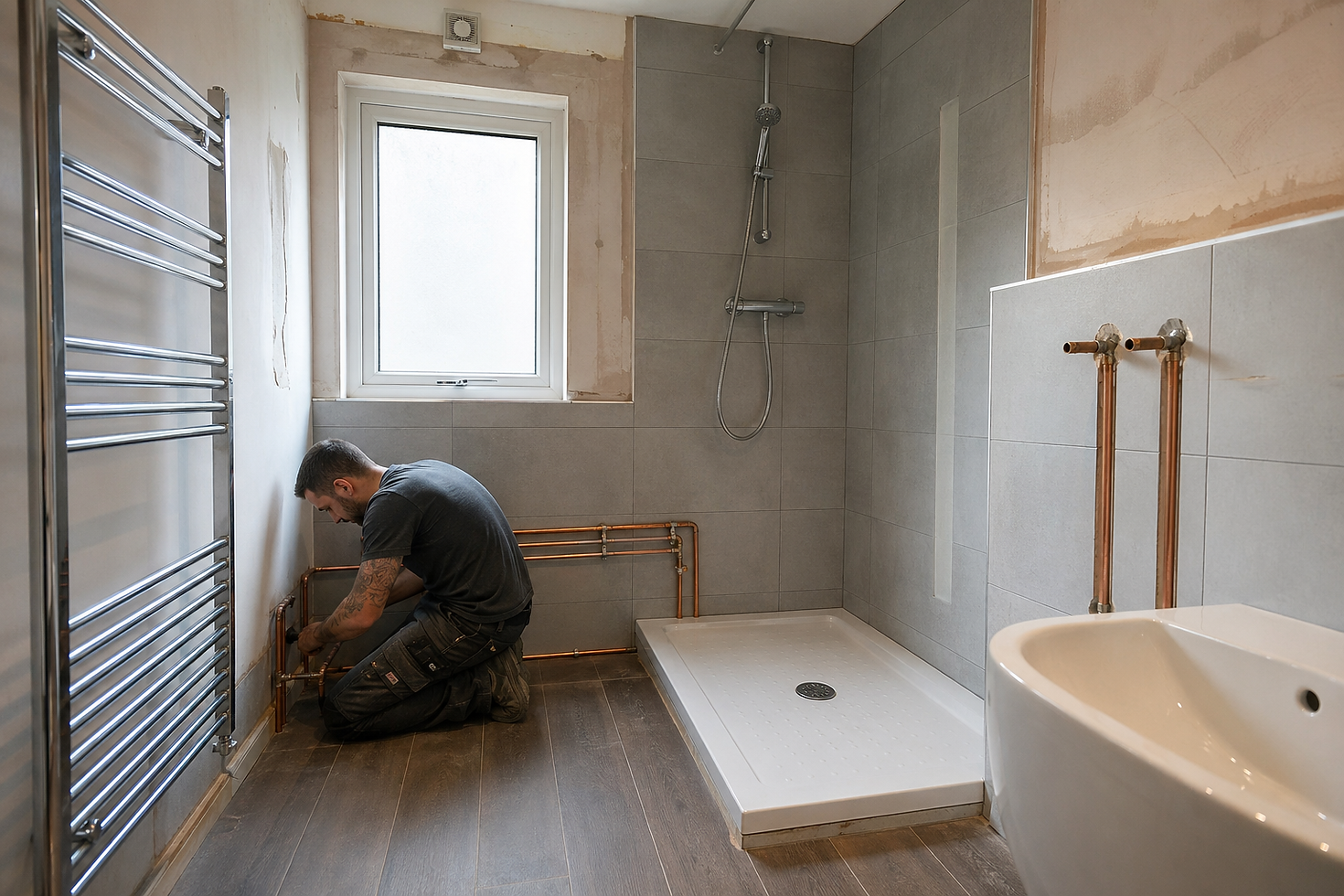
3. First-fix plumbing, heating and drainage
The first-fix stage is where the core infrastructure goes in. This is one of the most important parts of a full bathroom refurbishment, because it determines whether everything lines up, drains properly and performs as expected once the room is finished.
First-fix work can include:
Running new hot and cold water feeds
Altering waste and soil connections where layouts are changing
Setting shower valve positions and pipe centres for brassware
Repositioning feeds for baths, basins, WCs and vanity units
Installing or moving heating pipework for radiators or heated towel rails
Checking whether the existing boiler and hot water supply can support the new setup
If you are adding stronger showers or changing how the room is heated, this is also the right moment to review the wider system. For some homes, that may mean advice on whether existing boiler installations are sufficient. This stage is not glamorous, but it is what makes the finished room feel effortless to use.
4. Build stage, repairs and surface preparation
With the pipework in place, the build stage prepares the room for finishing. The exact scope varies from property to property, but this is often where walls are straightened, floors are strengthened, pipework is boxed neatly and the room is prepared for tiles and fittings.
Depending on the bathroom, this stage may include repairing damaged subfloors, improving wall surfaces, fitting suitable backer boards in wet areas and carrying out waterproofing where it is needed. These details matter because premium fittings will only look right if the surfaces beneath them are solid, level and ready to receive the final finish.
Rushing this part of the process can store up problems later. Careful preparation helps with tile lines, shower tray levels, sealing and the long-term durability of the room.
5. Tiling and second-fix installation
Once the background work is complete, the bathroom starts to take shape visually. Tiling, flooring and second-fix installation usually follow a logical order so that each element can be fitted cleanly and accurately.
Second-fix work may include:
Installing the bath, tray or wet room components
Fitting the WC, basin, vanity unit and taps
Connecting the shower valve, head and controls
Installing the heated towel rail and visible heating components
Fitting screens, panels, wastes, traps and final pipe connections
Applying sealant at the correct point in the process
This is the stage most homeowners look forward to, but it still relies on precision. Good second-fix work is about more than appearance. Levels, spacing, alignment, sealing and access for maintenance all need attention.
6. Testing, finishing and handover
Before a bathroom is signed off, the new installation should be checked thoroughly. That means testing water flow, checking for leaks, making sure wastes run away properly and confirming that heating elements and controls operate as they should.
It is also the stage for final finishing touches, snagging and cleaning down. A quality handover should leave you clear on how everything works, what drying or curing times to allow and how to look after the room once it is in use.
What can affect the timescale and cost?
No two bathroom projects are identical. A straightforward replacement in the same layout is very different from a full redesign with heating changes and hidden repairs.
The most common factors that affect timescale and budget are:
Layout changes: moving a WC, shower or bath usually means more drainage and plumbing work.
Condition of the room: damaged floors, uneven walls or old pipework can create extra preparation work.
Product choice: concealed fittings, large-format tiles and specialist finishes can take longer to install accurately.
Heating requirements: if the bathroom needs a towel rail, underfloor heating or better hot water performance, that has to be planned into the wider system.
Product availability: late changes or long lead times can hold up the installation sequence.
This is why a clear specification matters. The more decisions that are made before the job starts, the more realistic the programme and quote will be.
Why specialist coordination matters in bathroom projects
A bathroom is one of the most trade-heavy rooms in the house. Even when the room looks simple, the success of the result depends on different stages being coordinated properly. Plumbing, heating and build work all affect one another.
Working with one specialist team for the core installation can help reduce gaps between stages, improve accountability and protect quality from first fix through to final fit. It also means system checks are not treated as an afterthought.
We were founded in 2019 and work as a small specialist team, with quality workmanship, health and safety and a tidy, professional approach at the centre of how we deliver projects. Our owner trained through an apprenticeship in domestic plumbing and has additional training in heating and gas, which is especially important when bathroom work also affects hot water and heating performance.
Questions worth asking before you choose a contractor
If you are comparing quotes for a full bathroom refurbishment, it is worth asking a few practical questions before you commit:
What exactly is included in the quote? Ask whether removal, preparation, pipe alterations, fitting and final testing are all covered.
Has the heating and hot water demand been assessed? This matters if you are changing shower type or adding heating features.
What preparation work is allowed for? Good bathrooms rely on the condition of the walls and floor underneath.
When do final product choices need to be confirmed? This helps avoid delays later.
Who is responsible for sequencing the job? A bathroom should not feel like a collection of disconnected visits.
These questions help you compare quality and process, not just headline price.
FAQ: full bathroom refurbishment
What is included in a full bathroom refurbishment?
A full bathroom refurbishment usually includes removing the existing bathroom, carrying out first-fix plumbing and heating work, preparing walls and floors, fitting the new suite and completing final testing and finishing. The exact scope depends on whether the layout is changing and whether wider heating upgrades are needed.
Do I need to upgrade my boiler for a bathroom refurbishment?
Not always. If the new bathroom keeps a similar demand, the existing setup may be fine. However, if you are adding a more powerful shower, extra heating or significantly different hot water demand, it is sensible to review whether the current system is suitable before work starts.
Is it better to keep the existing bathroom layout?
Keeping the layout can reduce disruption and simplify plumbing and drainage. That said, a layout change can be worthwhile if it makes the room more practical or creates a better showering and storage arrangement. The right answer depends on the room, the property and your priorities.
When should I choose tiles and fittings?
As early as possible. Final choices affect measurements, valve positions, pipe centres, tray sizes, furniture allowance and lead times. Late changes are one of the easiest ways for a bathroom project to become slower and more complicated.
Can you handle heating work as part of the project?
Yes. We specialise in full bathroom refurbishments as well as heating work, including full heating systems. That is especially useful when the bathroom plan includes a heated towel rail, underfloor heating or a review of hot water performance.
Conclusion
A high-quality bathroom is never just about the fittings you can see. The plumbing, heating, preparation and installation stages all need to be planned and sequenced properly if you want a room that looks right, works well and lasts.
If you are planning a full bathroom refurbishment, we can help you think through the layout, plumbing, heating and installation work from the outset. Get in touch to discuss your project and arrange a quote. We work in and around Woolpit and Bury St Edmunds, and also cover Norwich, Thetford and Colchester.
Comments